Lieutenant Le Fever
The Life and Opinions of Tristram Shandy, GentlemanLieutenant Le Fever is a destitute officer whose failing health, bereavement, and dependence on his young son lead Uncle Toby to offer him shelter and care. His death makes Toby’s benevolence more than a passing gesture: Toby attends him to his grave, takes the orphaned boy into his household, and preserves the lieutenant’s sword as the sole inheritance he can give him.
Identity and Circumstances
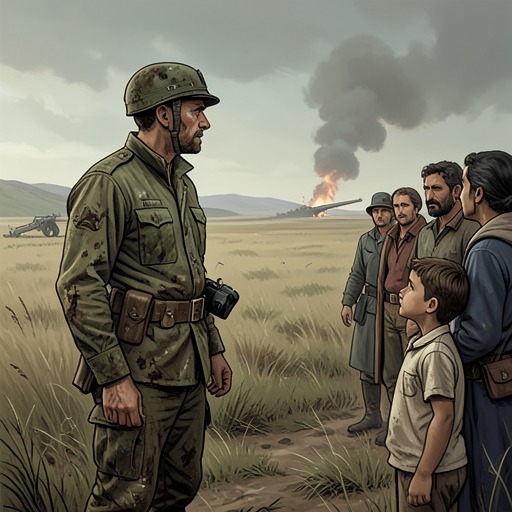
Le Fever is a lieutenant in Angus’s regiment. He and his son have come from Ireland and are travelling to join the regiment in Flanders, but illness stops them at a village inn. Having arrived with hired horses, he dismissed them the morning after reaching the inn, expecting that he and his son could hire others once he recovered. The landlord’s account makes clear that recovery is no longer likely: Le Fever has been ill for four days, has scarcely raised his head, and has only now asked for sack and thin toast.
The account reaches Toby through Corporal Trim, who goes to the inn to find out about the sick stranger. At first, the absence of a servant leaves Trim without the usual source of information. The landlord’s household instead provides the first details: Le Fever is too ill to travel, and his son is already heartbroken at the prospect of losing him. The practical vulnerability of the pair—stranded, short of means, and without an attendant—sets the conditions for Toby’s intervention.
A Soldier’s Story and a Father’s Grief
Trim finds Le Fever in bed with his head raised on one hand. A book and a cushion lie beside him, and his son has been attending him. When the boy reaches to put the book away, his father asks him to leave it where it is. The small exchange conveys the quiet intimacy of their care for one another without turning their private grief into a public performance.
Le Fever asks Trim to thank Captain Shandy and his son for their kindness. He recalls serving three campaigns with him in Flanders, though he doubts that Toby will remember him. He then identifies himself more specifically as the ensign at Breda whose wife was killed by a musket shot while she lay in his arms in their tent. Trim remembers the story; Toby later confirms that the regiment had pitied both Le Fever and his wife. The recollection places the lieutenant’s present crisis against an earlier loss that remains part of his identity and military history.
Le Fever draws a little ring from his bosom, tied with a black ribbon, and kisses it twice. He calls his son, Billy, who comes to the bedside, kneels, takes the ring, and kisses it; he then kisses his father and sits beside him in tears. The ring connects the remembered death of Le Fever’s wife to the bond between father and son. Toby is so affected by the scene that he wishes he were asleep, while Trim admits he wanted to cry alongside the boy. Their responses make compassion shared rather than solitary: Toby recognizes the grief, and Trim’s fellow feeling is affirmed as evidence of his good nature.
Toby’s Intervention and Le Fever’s Death
The following morning, Toby comes to the inn earlier than usual. He sits beside Le Fever without waiting on formalities, asks about his rest, illness, pain, and needs, and then explains a plan already made with Trim. Le Fever and his son are to come directly to Toby’s house; Toby will send for a doctor and an apothecary, Trim will nurse the lieutenant, and Toby himself will serve him. The offer is deliberately practical as well as kind, answering the immediate problems of sickness, lodging, and care.
The offer briefly revives Le Fever’s spirits. As Toby speaks, the boy presses close to him, takes hold of his coat, and draws it toward himself. Le Fever looks first at Toby and then at his son; the narrator describes the father-son attachment as a bond that is not broken. Yet the reprieve does not avert the death already approaching. Toby and the young Le Fever attend the lieutenant’s funeral as chief mourners. The governor of Dendermond gives him military honours, while Yorick buries him in his chancel and appears to preach a funeral sermon. The distinct military and ecclesiastical observances mark the respect paid to a man who had arrived at the inn with little beyond his service history and the people who mourned him.
The Son’s Inheritance and the Story’s Significance
After the funeral, Toby settles the accounts between the regiment’s agent and Le Fever, and between Le Fever and others. Once those obligations are resolved, little remains beyond an old regimental coat and a sword. Toby gives the coat to Trim to wear in memory of the lieutenant, and sets the sword aside for the boy, presenting it as the fortune left to him. The inheritance is modest in material terms, but Toby frames it as something the son can carry into the world with honour; his care thus continues beyond the father’s death.
Le Fever’s story is presented through several layers of narration: Tristram introduces it, Trim recounts what he has learned at the inn, and Toby’s remembered knowledge supplies the earlier history of Le Fever and his wife. The sequence moves from the bare circumstances of an illness to the ring, the military past, the father’s death, and the practical arrangements for the son’s future. Le Fever is not developed through an extended account of his own life; instead, the narrative makes his character legible through acts of care and remembered loss. His story also gives concrete form to Toby’s habitual readiness to shelter the unfortunate: the offer of a home, the attendance at the grave, and the sword preserved for the child turn sympathy into continuing responsibility.